Evonik and HP develop 3D-printable thermoplastic elastomer
Evonik and HP’s new co-branded* elastomer is a flexible high-performance specialty powder based on a thermoplastic amide grade (TPA) for 3D printing.
Evonik and HP’s new co-branded* elastomer is a flexible high-performance specialty powder based on a thermoplastic amide grade (TPA) for 3D printing.

Kumovis, developer of the world’s first FLM 3D printer built for medical production, is presenting new high-performance polymers at the leading trade fairs in medical technology and additive manufacturing.

In the industrial sector, 3D printing ranks among the major issues for the future, alongside robotics, digitalisation and machine learning.

Kumovis, the developer of the world’s first 3D printer with clean room integration, today announced that it has raised a€3.6 millionSeries A funding round.
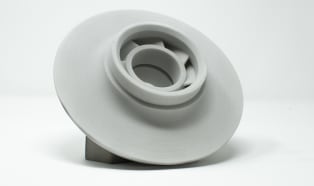
Domo Chemicals, a leader in Selective Laser Sintering (SLS) materials innovation, is strengthening its position as a key player in the additive manufacturing sector by partnering with Zare, a leading 3D-printed parts service bureau.

Evonik is the first company in the world to launch a 3D-printable PEEK (polyether ether ketone) filament as an implant-grade material for medical applications.

A coalition of companies and universities assembled by Stratasys to produce face shields leveraging 3D printers now numbers more than 150, the company said.

Nanofabrica, manufacturer of 3D printers for precision engineering, invites researchers, doctors and manufacturers to harness its manufacturing capabilities to develop COVID19 related medical devices and solutions.
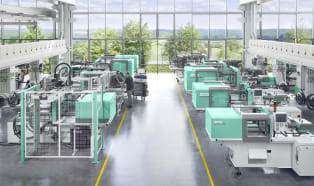
The notarised signing of the purchase contract on 12 February 2020 officially confirmed the takeover of German RepRap GmbH, based in Feldkirchen, by the entrepreneurial families Hehl und Keinath.

Kraiburg TPE has performed extensive tests to examine the suitability of its thermoplastic elastomers (TPEs) for use in additive manufacturing (AM).

Roughly 2000 exhibitors will be provided with a comprehensive overview of all plastics technologies at the 27th Fakuma in Friedrichshafen from the 13th through the 17th of October, 2020.

Plastics and rubber materials have revolutionized many aspects of sports and leisure activities over the years, and technology advances continue to improve safety, comfort, performance and – increasingly – sustainability, in those sectors.